
Older homes, cold winters, real fixes
Spray Foam Insulation in Flint, MI
Warmer floors, fewer ice dams and lower heating bills, with every area priced in writing before work starts.
- Free on-site estimates
- Written quote listing foam type, thickness and R-value for each area
- Rim joists, attic bypasses and moisture checked before we price
Insulating Flint Houses for a Michigan Winter
Spray foam insulation in Flint is mostly about keeping winter out of older houses. Wikipedia's 1991-2020 normals for Bishop International Airport show January nights averaging 16.0F, about 52 inches of snow in a typical year and a record low of -25F. Those cold months find every leak in a 1950s ranch or a 1920s bungalow: the rim joist, the attic floor, the hatch and the chases around plumbing and chimneys. We seal those leaks and insulate the spaces that need it, using closed-cell or open-cell spray foam where it fits and blown-in insulation where it does the same job for less.
Housing built before insulation mattered
Flint was founded as a trading post in 1819, grew on lumber and carriages, and then grew again around Buick, Chevrolet and General Motors, which was founded in the city in 1908. The housing reflects that boom. Census data summarized by Point2Homes shows about 25.5% of Flint's homes were built in 1939 or earlier and another 31.4% in the 1950s, so well over half the city's houses are more than 65 years old. About 80.6% of the units are detached single-family homes. Many of them still have the original empty or barely filled wall cavities, thin attic insulation and bare rim joists.
What the code and the climate ask for
Genesee County is in Climate Zone 5A. The ceiling target in Michigan's residential energy code table is R-38, with R-20 or R-13 plus R-5 continuous for wood-frame walls. For existing homes in Zone 5, the U.S. Department of Energy recommends going further in the attic: R-60 where there is little or nothing, or adding R-49 on top of 3 to 4 inches that are already down. Most older Flint attics we see are far short of either figure.
Closed cell vs open cell
Closed-cell foam cures hard and dense, rates about R-5 to R-7 per inch in HomeGuide's guide, slows water vapor at normal thickness and stiffens what it bonds to. It is our usual pick for rim joists, basement walls, pole barns and anywhere moisture is a concern. Open-cell foam is soft, expands much more, rates about R-3.5 to R-3.7 per inch and lets vapor pass, so it suits roof decks in a planned sealed attic, interior walls and sound control. In a Michigan basement or on steel, closed-cell is almost always the better fit.
Spray foam insulation cost
HomeGuide's 2026 guide puts installed spray foam at $1.50 to $5.00 per square foot, with open-cell at $1.50 to $3.50 and closed-cell at $3.00 to $5.00. It lists rim joists at $2,000 to $2,500, a whole house at $8,000 to $20,000, and a common job minimum of $1,000 to $2,000 or more. Fixr's figures for existing walls run $3.15 to $7.50 per square foot. These national ranges help with planning, but access, thickness and how much old material has to come out set the real price. The written estimate we hand you after the visit is the price you pay.
Rebates worth checking
Consumers Energy supplies power in Flint and much of Genesee County. Its rebate page has listed insulation rebates for attics of 500 square feet or more ($125 to $200 for combined gas and electric customers, depending on the final R-value), above-grade walls ($125), and basement walls, crawl spaces and rim joists ($50 each), with a December 31 cutoff for the posted amounts. Programs change, so check the current page before you count on the money. Our paperwork lists the square footage and R-value the form asks for.
Choosing between insulation contractors
When you compare spray foam insulation contractors or insulation companies near you, ask each one the same questions. What gets air sealed before anything is insulated? Which foam goes where, how thick, and what R-value does that give? How will the ignition or thermal barrier be handled in a basement or garage? What happens to the old insulation? How long should the family stay out while the foam cures (HomeGuide says at least 24 hours)? A quote that just says "spray foam basement" with one number leaves too much to guess. Ours lists every area on its own line.
Garages, shops and pole barns
Outside the city, Genesee and Lapeer counties have plenty of detached garages, pole barns and steel shops. Bare metal gets cold fast and drips condensation when warm air hits it. Closed-cell foam on the walls and roof insulates and stops that drip in one pass, which is why it is the usual choice for buildings people want to heat through a Michigan winter.
Where We Work
We work in Flint and across Genesee County: Burton, Flint Township, Grand Blanc, Swartz Creek, Flushing, Mount Morris, Clio, Montrose, Davison, Fenton and Linden, plus Lapeer to the east. The city and its inner suburbs are full of 1920s to 1950s houses with plaster walls and bare rim joists. Grand Blanc, Swartz Creek and Fenton add 1960s to 2000s subdivisions with finished basements and bonus rooms. The townships and the Lapeer side have farmhouses, pole barns and shops. Each town page covers what stands out there.
- Spray Foam Insulation in Flint, MI
- Spray Foam Insulation in Burton, MI
- Spray Foam Insulation in Grand Blanc, MI
- Spray Foam Insulation in Flint Township, MI
- Spray Foam Insulation in Fenton, MI
- Spray Foam Insulation in Flushing, MI
- Spray Foam Insulation in Davison, MI
- Spray Foam Insulation in Swartz Creek, MI
- Spray Foam Insulation in Mount Morris, MI
- Spray Foam Insulation in Clio, MI
- Spray Foam Insulation in Montrose, MI
- Spray Foam Insulation in Linden, MI
- Spray Foam Insulation in Lapeer, MI
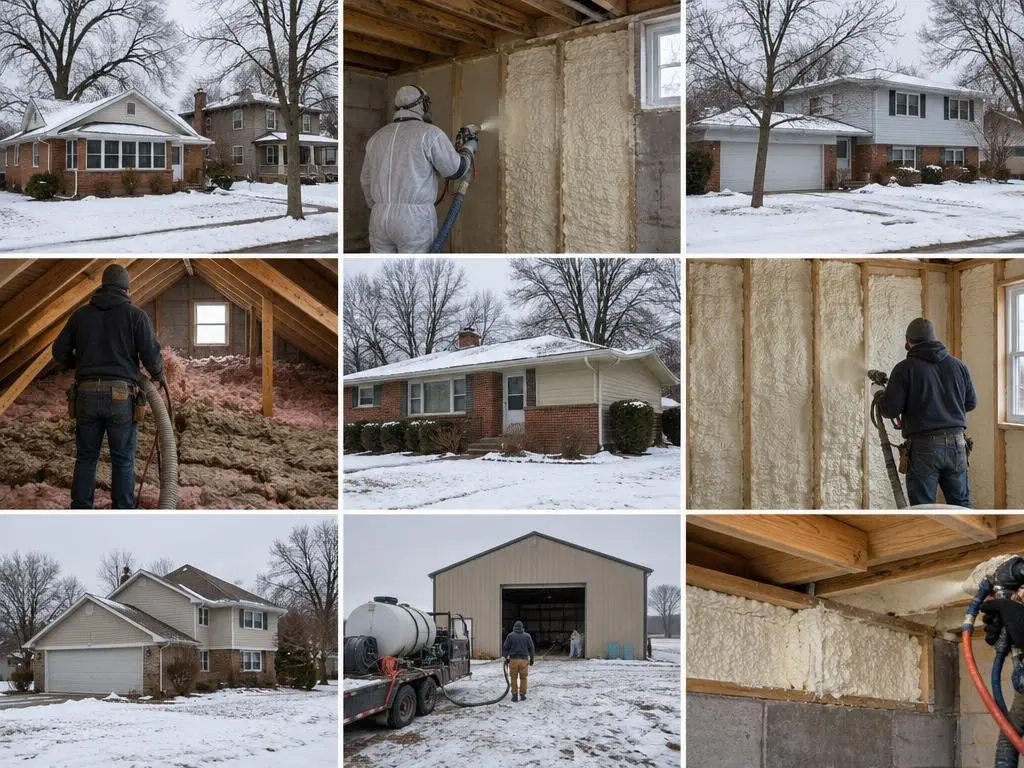
Why Homeowners Call Spray Foam Insulation Flint
We look before we price
Every quote follows a visit to the attic, basement or building, not a guess over the phone.
Air sealing comes first
Top plates, chases, the hatch and the rim joist get sealed so the new insulation actually performs.
The right material for each spot
Closed-cell, open-cell, cellulose or fiberglass, chosen for the surface and the moisture, with the reason written down.
Quotes you can compare
Each area lists material, thickness or depth, R-value and price.
Common Questions
How much should I expect to pay for spray foam insulation?
HomeGuide's 2026 figures put installed spray foam at $1.50 to $5.00 per square foot, with closed-cell at the higher end. Rim joists alone run about $2,000 to $2,500 in that guide, and a whole house $8,000 to $20,000. Your written estimate after our visit is the actual price.
Why is spray foam insulation now a red flag for some buyers?
Mostly because of bad installs: foam sprayed too thick in one pass, foam that hid a roof leak, or a sealed attic that nobody planned around the furnace and ventilation. Inspectors and lenders may also ask questions when foam covers the roof deck. A careful plan, the right thickness and paperwork showing what went in answer most of those concerns.
Why are people removing spray foam insulation?
Usually because it went in the wrong place or the wrong way: over a leak, too thick, mixed badly, or so that it hid damage an inspector wanted to see. HomeGuide puts foam removal at $1.00 to $2.50 per square foot, so getting the plan right the first time saves money.
What R-value should a Flint attic have?
Michigan's code table lists R-38 for ceilings in Climate Zone 5, and the Department of Energy recommends R-60 for an existing Zone 5 attic with little insulation, or adding R-49 over 3 to 4 inches. We measure what you have and quote the depth needed.
Is closed-cell foam worth it on a rim joist?
Usually yes. The rim joist is one of the leakiest and coldest spots in a Michigan basement, and closed-cell foam seals the gaps and insulates in one step without trapping moisture against the wood the way loose batts can.
Can you insulate the walls of an old house without tearing them open?
Often. Dense-packed cellulose or injection foam can go into closed walls through small holes. We check for knob-and-tube wiring and blocked cavities first, since some walls are better left alone or handled from the outside during re-siding.
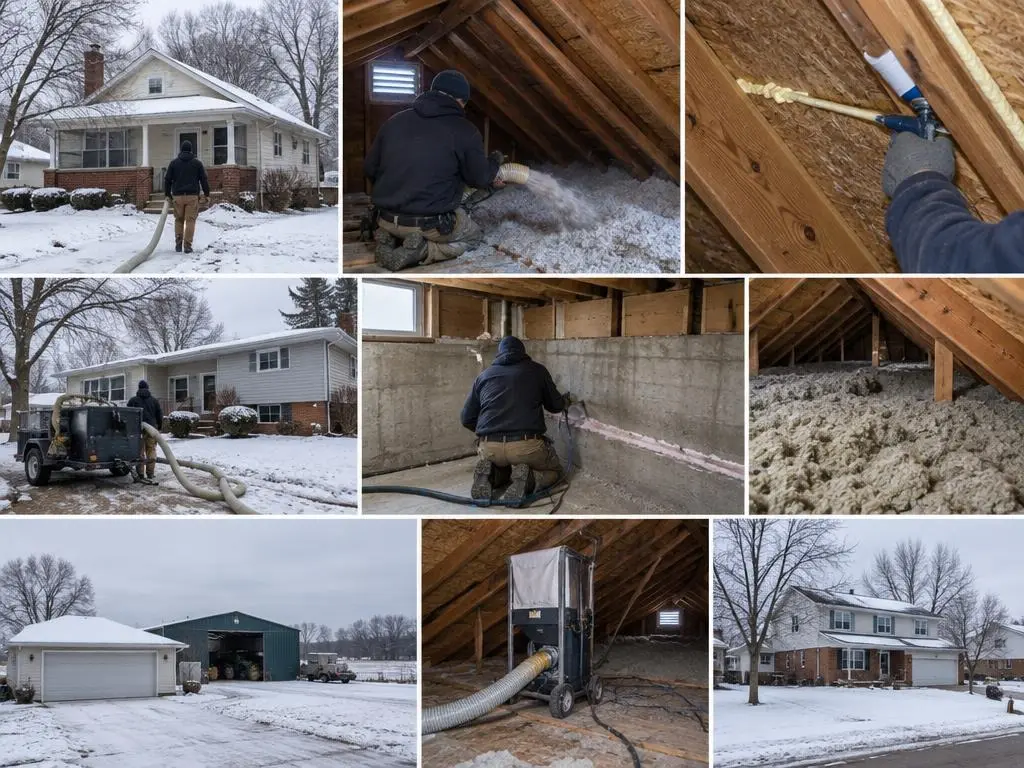
What We Do
Six kinds of insulation work, matched area by area to your house or building, from foam on a rim joist to clearing out an old attic.
Spray Foam Insulation
Closed-cell and open-cell foam that insulates and air seals in one layer, for rim joists, basements, attics, walls and pole barns.
Learn more →Attic Insulation & Air Sealing
Sealing the leaks in the attic floor and bringing the insulation up to depth to stop heat loss and ice dams.
Learn more →Basement & Rim Joist Insulation
Closed-cell foam on rim joists and basement walls to stop drafts and cold floors in Michigan basements.
Learn more →Exterior Wall Insulation
Dense-pack and foam for the empty or thin walls of older Flint homes, plus open-wall foam for additions and remodels.
Learn more →Pole Barn & Garage Insulation
Closed-cell foam for pole barns, steel shops and detached garages to keep the heat in and stop condensation.
Learn more →Old Insulation Removal
Taking out wet, moldy, rodent-damaged or failed insulation so the new material can do its job.
Learn more →Get a Written Insulation Quote in Flint
We come out, check the attic, basement and rim joist, and send a written price with the material and R-value for every area.